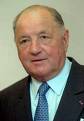
 Bernard Arnault, owner of LVMH and Belgian billionaire Albert Frère announced today they would create a new joint investment venture with an equity financing capacity of one billion euros.
Groupe Arnault and Frere's NPM/CNP(Belgian) intend to invest mainly in European companies in both listed and unlisted (rumours are, they have their eye on Aston Martin). .
The very discreet Baron Albert Frère (80), keen huntsman (game and business) has prowling corporate Europe in a restless chase for a bargain, buying, selling and swapping pieces of some of the most prominent businesses in Germany, Italy, France and his native Belgium. Sometimes called the Warren Buffett of Europe, his diverse portfolio of investments and deals usually ignore national boundaries...
The most nagging question for Frère-watchers is what he will do with the more than €4 billion, or $5 billion, reaped from a private sale in July of the 25 percent stake in the German media company Bertelsmann owned by his holding company, Groupe Bruxelles Lambert, known as GBL.
Ordinarily, Frère is a discreet investor who shuns the limelight, saving his high-energy charisma to cultivate a blue-chip network of chief executives, fellow business tycoons and aristocrats.
But lately he has been more voluble, leading to speculation that he is poised for The Next Big Deal.
Behind the scenes, as the largest individual shareholder in Suez, he is a player in the current efforts to merge that French power utility with Gaz de France, the nation's top natural gas supplier, to create Europe's largest utilities player, with a €75 billion market capitalization. Frère has also rapidly amassed the largest single stake in Lafarge, placing pressure on that French cement maker to deliver results. Through Compagnie Nationale à Portefeuille, another holding company, he recently paid Suez €120 million for a 5 percent stake in the French television channel M6. The market is still waiting for something more dramatic from Frère - because he has started talking to the news media again.
It has been a long way to come for Frère, a high school dropout at 18 and son of a nail merchant. His widowed mother took over the family scrap-iron business at age 40, while raising three children. From his mother, Frère recalled, he acquired his enduring thriftiness, a habit ingrained every time he switches off blazing lights. "A diploma is important at the beginning," he says, "but for the rest of a professional career, the tools of success are constant work, business instincts, pragmatism and charisma." In the 1950s, he parlayed money from the family nail-making business to buy a handful of steel makers. It was the beginning of a career based on an uncanny sense of timing.
He was one of the first industrialists to realize that the Korean War would spur demand for steel. He then made a fortune in 1979 when the Belgian government nationalized the country's steel companies before the industry slid into decline.
Frère forged what became a lifetime alliance with Paul Desmarais, a Canadian entrepreneur, and with the money from the state takeovers they bought GBL in 1982, leading to a cascade of investments.
With Desmarais acting as the strategist and Frère executing the deals, they bought and sold many of the crown jewels of the Belgian business world, which had gained in value as the European Union evolved into a single market.
Perhaps Frère is most famous for relentlessly driving consolidation of corporate Europe in industries like banking, insurance, energy and media. He sold Banque Bruxelles Lambert to the Dutch financial giant ING; shares of Petrofina to Total, the French oil behemoth; Royal Belge insurance to AXA in France; and RTL, the Luxembourg- based television broadcaster, to Bertelsmann, the German media company. Last year, GBL played a major role in the Suez decision to buy the remaining shares it did not already own in Electrabel, the biggest Belgian electric utility.
There was grumbling in Belgium that he was selling out his country. But Frère had already become part of the aristocracy, having been awarded the title of baron by King Albert II in 1994. Frère also has been awarded the French Legion of Honor.
Today Frère is one of Europe's richest men, with a net worth estimated by Forbes magazine at more than $3 billion. A collector of fine art that includes paintings by Renoir and Magritte, Frère divides his life largely between Brussels, Paris and a home in Gerpinnes, in the Belgian countryside. He also has a vacation home in Saint Tropez, France, where his neighbors include Arnault, his good friend.
Arnaud and Frère are already co-owners of the storied Château Cheval Blanc winery in Bordeaux, talk two to three times a week, and Frère's daughter was maid of honor at the wedding of Arnault's daughter. The relationship between the two men is one of many that Frère has cultivated as part of a network of friends and business colleagues who provide him with vital information that becomes part of his successful investing maxim: "As time passes, opportunities arise."
Alain Minc, an economic adviser and author who is a longtime friend of Frère's, has watched him navigate the Continent's boardrooms. He has also seen him in tough negotiations when they brokered a truce between two of the richest men in France- François Pinault, chairman of the PPR retailing empire, and Arnault - in a feud over the Italian fashion house Gucci.
"He's not a mere investor," Minc said. "He participates in the game because he enjoys human relations and he enjoys being friends. And he has a very skillful ability for networking by creating empathy. He enjoys life. He enjoys food and wine and laughter, and so people like him."
Arnault said it is Frère's convivial and warm personality that draws people into his circle and to dinner parties at his homes.
"He's somebody you like immediately," Arnault said. "And as long as he has a lot of relationships in Europe and outside Europe, it gives him a view of many, many opportunities and he has been able to seize on that."
To hammer out the deal with Bertelsmann for the sale of GBL's 25 percent stake in the company, Frère organized a dinner at his home in Belgium this year with his wife, Christine; his son, Gérald, 55, who is chairman of the board of Compagnie Nationale à Portefeuille; the chief executive of Bertelsmann, Gunther Thielen; and Liz Mohn, doyenne of the family that is the largest shareholder in Bertelsmann.
Frère's initial 2001 investment in Bertelsmann was one of his biggest coups and had a profound cultural impact on Bertelsmann. Ultimately, Bertelsmann bought back GBL's shares to avoid taking the family-controlled company public.
Thomas Middelhoff is a former chief executive of Bertelsmann who negotiated the sale of the stake to Frère in 2001 in exchange for a controlling interest in Frère's pan-European broadcaster, RTL. He said he tried to strike the best deal by imagining Frère's next move and countering his most lethal weapon.
"I tried to beat him with the same charm - tough and clear, with a firm position," Middelhoff said, noting that their business relationship evolved into friendship.
But Frère's moves often remain so cryptic to the market that analysts and rivals are forced to glean clues from his rare public utterances.
This month, Frère gave an interview to a French business publication, L'Expansion, which quoted him as saying that he would not rule out increasing his 8 percent stake in Suez following the company's merger with Gaz de France.
To the International Herald Tribune, he said of Suez that there was "no question at all that we intend to stay as a stable shareholder in the long run."
He also said his company, GBL, might increase its almost 11 percent stake in Lafarge, though he did not say whether he would seek a seat on the company's board. "It is not our intention, but we will see in due time," he said.
He offers few clues about how he will spend the proceeds from the Bertelsmann sale. "There are numerous opportunities in many sectors, including investments in quasi-industry or private equity," he said, noting that whether the industry is media or cement, the goal is the same: "a search for value."
But whatever the investment, he intends to be in the thick of the deal, maintaining his negotiating form with golf, hunting, telephone calls, and a daily 45- minute regimen on an exercise bicycle.
Succession, he said, is assured with a talented and loyal group of managers and his son, Gérald, waiting in the wings. His younger son, Charles-Albert, died in a car crash in 1999. Frère has created a Belgian foundation, Fonds Charles-Albert Frère, to help disabled people and victims of poverty.
Friends say he will pursue the next deal until his very last day and he has clearly negotiated his terms. "I have," he said, "simply erased the word 'retirement' from my vocabulary."
Summary only...


 Hermès annonce la signature d'un accord avec la Fondation de Famille Sandoz.