Showing posts with label Luxury Brands. Show all posts

29 March 2008

Fabergé

Pallinghurst Ressources restructures and clarifies coloured stones business.

By buying the prestigiuous Fabergé name from Unilever, Fabergé will once again be synonymous with exceptional quality ( - and not awful aftershave).

In its quest to create a new industry business model and restructuring the coloured stone distribution channels, Pallinghurst has constituated a rather large gemstone mines portfolio and has proposed a reverse takeover bid in Gemfields (miner listed on AIM).

Fabergé Limited has agreed to grant Gemfields an option to acquire a worldwide and exclusive 15 year license to use the Fabergé brand name in respect of gemstones (excluding diamonds) mimicking De Beer's mine-to-market business approach and creating further value under the Fabergé name.

Using the De Beer's (again) led Kimberly Program as a model and in a bid to increase the stones' value, their origin will be disclosed and the mines will be subject to monitoring to ensure that the gems are produced "ethically".
"We will guarantee the provenance," CEO Pallinghurst Gilbertson said.

Fabergé Ltd has appointed Tatiana and Sarah Fabergé to its supervisory council. The two are great-great-granddaughters of the founder of House of Fabergé, Gustav Fabergé, and will oversee product development for the business.

The House of Fabergé, jewellry, tableware and iconic egg maker from Russia was nationalized by the Bolsheviks in 1918. Sam Rubin, an American unrelated to the family, founded Fabergé Inc. after World War II, sold it in 1964, and the company was eventually bought by Unilever, which only sold it to Pallinghurst in January of this year.

A "well done" must be uttered for the very simple and effective Fabergé web page.
Fabergé Ltd Press Release

14 February 2008

Rachat Lalique - Fin

Lalique sera "Art et Frangrance" et non "Emerisque"

PARIS (AFP) - La société suisse Art et Fragrance a annoncé jeudi le rachat de la cristallerie de luxe Lalique au groupe Pochet pour 44 millions d'euros, avec pour objectif un retour rapide aux bénéfices grâce à des investissements, sans suppressions d'emplois.

"Le rachat de Lalique S.A. par Art et Fragrance S.A a été réalisé aujourd'hui (jeudi, ndlr) par la signature d'un contrat définitif", a annoncé dans un communiqué le groupe de luxe suisse, spécialisé dans les parfums et les cosmétiques.

La cristallerie vosgienne créée en 1921 est restée "légèrement déficitaire" en 2007. Mais Art et Fragrance veut mettre en place un "plan de croissance" de "trois à cinq ans" pour lui permettre de revenir aux bénéfices dès 2009, a-t-elle expliqué.

A la clé: 12 millions d'euros d'investissements d'ici à 2012, et des mesures de "renforcement de la marque, d'augmentation des capacités de production et d'amélioration de l'efficacité de la distribution".

Le tout sans licencier un seul des 600 salariés employés dans le monde, a assuré à l'AFP Silvio Denz, le président d'Art et Fragrance, également nouveau PDG de Lalique.

"Nous n'avons pas l'intention de réduire les effectifs", a déclaré cet homme d'affaires qui se présente lui-même comme un collectionneur des oeuvres du fondateur de Lalique, le verrier René Lalique, depuis 20 ans.

"Nous avons besoin de produire pour avoir une croissance future, donc nous avons besoin des ouvriers", a-t-il ajouté, n'excluant pas, à terme, d'embaucher.

Les syndicats ont accueilli l'annonce du rachat par le suisse avec "soulagement", alors qu'un homme d'affaires indien, Ajay Khaitan, représentant le fonds d'investissement britannique Emerisque, a mené selon eux des "négociations exclusives" avec Pochet jusqu'au 31 janvier.

Entre les plans suisse et anglo-indien, "c'était le jour et la nuit", a estimé Pascal Grussi, secrétaire du comité central d'entreprise (CCE) et délégué syndical FO.

"Avec Emerisque, on allait tout droit vers la délocalisation", a-t-il ajouté, soulignant que les expertises commanditées dans le cadre du CCE avaient montré que le fonds n'entendait faire "aucun investissement en France".

Sur l'unique site de production de Lalique, à Wingen-sur-Moder (Bas-Rhin), qui emploie 260 salariés sur les 425 présents en France, Silvio Denz veut investir dans les "18 à 24 mois" dans un nouveau "four à bassin" qui permettra de faire croître la production globale de "20 à 30% supplémentaires par an".

En 2007, elle a progressé de 5%, dont +10% pour le seul cristal.

Le site de Wingen assure chaque année deux nouvelles collections, soit une production qui oscille entre 420.000 et 500.000 pièces.

Autre priorité: mener de front le développement des trois spécialités de Lalique (le cristal, les parfums et les bijoux) et le renforcement de sa présence sur les marchés clés de l'Asie.

Le rachat de Lalique intervient alors que la cristallerie française, et plus généralement la verrerie, traverse depuis le milieu des années 2000 une période de turbulences.

Déficitaire, le fleuron Baccarat, créé en 1720, est tombé dans l'escarcelle de Starwood Capital en 2005. Le fonds d'investissement américain a lancé en 2007 un ambitieux plan de relance prévoyant 25 millions d'euros d'investissements par an, sans suppressions de postes.

A l'inverse, Arc International a prévu de supprimer d'ici à fin 2010 la moitié des 12.000 postes qu'il comptait encore au début des années 2000. Le leader mondial des arts de la table a encore annoncé mercredi la suppression de 560 postes et l'arrêt de la production de son célèbre cristal d'Arques.

Pour Art et Fragrance, basé près de Zürich, le rachat de Lalique est aussi "une étape de croissance décisive", qui va lui permettre d'élargir ses activités et multiplier par quatre ses ventes annuelles, à 140 millions de francs suisses (87 millions d'euros).

06 December 2007

IPO or not to IPO?

Wall Street Journal :
MILAN -- Salvatore Ferragamo SpA and Prada SpA, two of the world's biggest fashion names, are sticking to plans for stock-market listings in Milan next year despite signs the luxury-goods sector is heading for turbulent times.
For each, the planned listing of a minority of its shares is perhaps the best shot for the family owners to raise the cash necessary to fund expansion around the world without sacrificing control. But the desire to go public against the increasingly difficult market backdrop shows how critical the need for financing has become for Europe's family-owned fashion labels.

By Stacy Meichtry and Christina Passariello.

Prada has postponed it's IPO several times (especially in september 2001), and rumours have been running wild for years. The Italian company may need the cash to expand aggressively into China, Brazil, and India, as well as to increase its presence in the United States (especially with it's brand MIU MIU) and in Japan. Based on its sale of 5% of the company to Intesa Sanpaolo last year, the company is worth at least $2.7 billion.

05 December 2007

Rachat Lalique

Et de deux....Après Baccarat c'est au tour de Lalique.

(AFP) - Au printemps dernier, après plusieurs mois de bataille acharnée, le fonds Starwood a en effet remporté la partie qui l'opposait aux actionnaires minoritaires historiques de Baccarat. Les Fondations de Chambrun et Cognacq-Jay, toutes deux présidées par l'homme d'affaires Georges Renand, ont accepté de vendre à l'investisseur américain la minorité de blocage _ 34 % _ qu'elles détenaient ensemble. Starwood détenait déjà 52 % du capital depuis la reprise à la mi-2005 de la totalité de l'empire Taittinger, pour 2,6 milliards d'euros.

Aujourd'hui l'illustre maison LALIQUE risque de tomber dans les maison d'un autre fond d'investissement.
Le Groupe Pochet actionnaire depuis 30 ans (majoritaire depuis 1994) avec la famille du fondateur Réné Lalique va céder cette marque icône de la cristallerie française de luxe.

STRASBOURG (AFP) - L'homme d'affaires indien Ajay Khaitan, du fonds d'investissement britannique Emerisque, a annoncé mercredi qu'il était en "négociations exclusives" pour racheter la cristallerie de luxe Lalique au groupe Pochet, se voulant rassurant sur sa volonté de développer la société.

"Lalique est une marque française de luxe fabriquée en France", a-t-il assuré lors d'un point-presse à Strasbourg, affirmant qu'il investirait 15 millions d'euros dans son développement et qu'il n'y aurait pas de délocalisation de la cristallerie de Wingen-sur-Moder (Bas-Rhin), unique site de production Lalique dans le monde qui emploie 260 personnes.


De même, "l'équipe existante restera en place", même si le management de l'entreprise aura besoin de "ressources supplémentaires" pour faire face au défi qu'Ajay Khaitan entend relever : doubler d'ici cinq ans les ventes en rajeunissant la marque, développer de nouveaux produits (bijoux, accessoires de mode) et miser sur les marchés émergents que sont l'Inde, la Chine, la Russie et le Moyen-Orient.

(Devrait on s'attendre à l'annonce d'un nouveau directeur artistique comme chez Baccarat?)

La vente n'est pas encore actée, le comité central d'entreprise (CCE) de Lalique n'ayant toujours pas rendu son avis consultatif après avoir mandaté début novembre un expert pour une analyse des données économiques financières et sociales de l'entreprise.


Si la vente aboutit, Emerisque deviendra l'investisseur "opérationnel" minoritaire (chargé de définir la stratégie de l'entreprise), au côté d'un fonds d'investissement majoritaire, Fleming Ventures. Détenu par la famille Fabiani, une famille d'origine indienne basée en Espagne Fleming est spécialisé dans les investissements financiers, technologiques et immobiliers.

Ajay Khaitan reste flou tant sur le montant de la transaction que sur le pourcentage exact de la part minoritaire qu'il entend prendre dans le capital de Lalique.
Son fonds Emerisque, fondé en 2003, s'est spécialisé dans le rachat de marques en difficulté, comme le fabricant de jeans Lee Cooper
(Dont il a délocalisé la majeur parti de la production en Chine), Puma ou Ben Sherman.


Dans ces précédant rachats, Ajay Khaitan et ses équipes (fidèles) ont réussis à harmoniser le positionnement des marques sur tous les marchés en consolidant les différents channels de distribution, en renforçant l'image ("up-branding practises") et en réorganisant les sites de production.
Lee Cooper
A noter que Ajay Khaitan est aussi à la tête de AVATAR CAPITAL Ltd, société décrite par lui même comme :
"Avatar Capital - business turnaround and non-core company recovery specialists - the only Value Reincarnation company in the UK " - Une société qui souhaite inverser la tendance des flux de capitaux "ouest-est".

04 December 2007

Prada On the Net


First steps to conquering the web? I was surprised to see Prada advertising on the site of Madame Figaro. Miuccia Prada and her husband Bertelli, always take their time to implement new concepts, but once the projects start, well, let's just say they will probably be pioneers in less than 6 months.

e-shop Prada available for gifts.

21 October 2006

Hermès Time

Hermès annonce la signature d'un accord avec la Fondation de Famille Sandoz.
Le groupe prendra dans le cadre de cet accord une participation de 25% dans le capital de Vaucher Manufacture Fleurier. L'investissement porte sur un montant de 15,7 millions d'euros. Cette opérations est réalisées par le biais d'augmentations de capital. La société Vaucher Manufacture Fleurier est spécialisée dans la conception, la production et l'assemblage de mouvements mécaniques de haute horlogerie, notamment la production de l'échappement et du balancier-spiral, cœur stratégique des garde-temps. Elle fournit entre autres les marques Parmigiani, également en mains de la famille Sandoz, et Hermès. Cette prise de participation d'Hermès dans la société Vaucher Manufacture Fleurier permet de renforcer l'activité horlogerie dans le groupe. .

19 October 2006

Luxury and Discretion

Bernard Arnault, owner of LVMH and Belgian billionaire Albert Frère announced today they would create a new joint investment venture with an equity financing capacity of one billion euros.
Groupe Arnault and Frere's NPM/CNP(Belgian) intend to invest mainly in European companies in both listed and unlisted (rumours are, they have their eye on Aston Martin). .
The very discreet Baron Albert Frère (80), keen huntsman (game and business) has prowling corporate Europe in a restless chase for a bargain, buying, selling and swapping pieces of some of the most prominent businesses in Germany, Italy, France and his native Belgium. Sometimes called the Warren Buffett of Europe, his diverse portfolio of investments and deals usually ignore national boundaries...

The most nagging question for Frère-watchers is what he will do with the more than €4 billion, or $5 billion, reaped from a private sale in July of the 25 percent stake in the German media company Bertelsmann owned by his holding company, Groupe Bruxelles Lambert, known as GBL.
Ordinarily, Frère is a discreet investor who shuns the limelight, saving his high-energy charisma to cultivate a blue-chip network of chief executives, fellow business tycoons and aristocrats.
But lately he has been more voluble, leading to speculation that he is poised for The Next Big Deal.
Behind the scenes, as the largest individual shareholder in Suez, he is a player in the current efforts to merge that French power utility with Gaz de France, the nation's top natural gas supplier, to create Europe's largest utilities player, with a €75 billion market capitalization. Frère has also rapidly amassed the largest single stake in Lafarge, placing pressure on that French cement maker to deliver results. Through Compagnie Nationale à Portefeuille, another holding company, he recently paid Suez €120 million for a 5 percent stake in the French television channel M6. The market is still waiting for something more dramatic from Frère - because he has started talking to the news media again.

It has been a long way to come for Frère, a high school dropout at 18 and son of a nail merchant. His widowed mother took over the family scrap-iron business at age 40, while raising three children. From his mother, Frère recalled, he acquired his enduring thriftiness, a habit ingrained every time he switches off blazing lights. "A diploma is important at the beginning," he says, "but for the rest of a professional career, the tools of success are constant work, business instincts, pragmatism and charisma." In the 1950s, he parlayed money from the family nail-making business to buy a handful of steel makers. It was the beginning of a career based on an uncanny sense of timing.
He was one of the first industrialists to realize that the Korean War would spur demand for steel. He then made a fortune in 1979 when the Belgian government nationalized the country's steel companies before the industry slid into decline.
Frère forged what became a lifetime alliance with Paul Desmarais, a Canadian entrepreneur, and with the money from the state takeovers they bought GBL in 1982, leading to a cascade of investments.
With Desmarais acting as the strategist and Frère executing the deals, they bought and sold many of the crown jewels of the Belgian business world, which had gained in value as the European Union evolved into a single market.
Perhaps Frère is most famous for relentlessly driving consolidation of corporate Europe in industries like banking, insurance, energy and media. He sold Banque Bruxelles Lambert to the Dutch financial giant ING; shares of Petrofina to Total, the French oil behemoth; Royal Belge insurance to AXA in France; and RTL, the Luxembourg- based television broadcaster, to Bertelsmann, the German media company. Last year, GBL played a major role in the Suez decision to buy the remaining shares it did not already own in Electrabel, the biggest Belgian electric utility.
There was grumbling in Belgium that he was selling out his country. But Frère had already become part of the aristocracy, having been awarded the title of baron by King Albert II in 1994. Frère also has been awarded the French Legion of Honor.

Today Frère is one of Europe's richest men, with a net worth estimated by Forbes magazine at more than $3 billion. A collector of fine art that includes paintings by Renoir and Magritte, Frère divides his life largely between Brussels, Paris and a home in Gerpinnes, in the Belgian countryside. He also has a vacation home in Saint Tropez, France, where his neighbors include Arnault, his good friend.
Arnaud and Frère are already co-owners of the storied Château Cheval Blanc winery in Bordeaux, talk two to three times a week, and Frère's daughter was maid of honor at the wedding of Arnault's daughter. The relationship between the two men is one of many that Frère has cultivated as part of a network of friends and business colleagues who provide him with vital information that becomes part of his successful investing maxim: "As time passes, opportunities arise."
Alain Minc, an economic adviser and author who is a longtime friend of Frère's, has watched him navigate the Continent's boardrooms. He has also seen him in tough negotiations when they brokered a truce between two of the richest men in France- François Pinault, chairman of the PPR retailing empire, and Arnault - in a feud over the Italian fashion house Gucci.
"He's not a mere investor," Minc said. "He participates in the game because he enjoys human relations and he enjoys being friends. And he has a very skillful ability for networking by creating empathy. He enjoys life. He enjoys food and wine and laughter, and so people like him."
Arnault said it is Frère's convivial and warm personality that draws people into his circle and to dinner parties at his homes.
"He's somebody you like immediately," Arnault said. "And as long as he has a lot of relationships in Europe and outside Europe, it gives him a view of many, many opportunities and he has been able to seize on that."
To hammer out the deal with Bertelsmann for the sale of GBL's 25 percent stake in the company, Frère organized a dinner at his home in Belgium this year with his wife, Christine; his son, Gérald, 55, who is chairman of the board of Compagnie Nationale à Portefeuille; the chief executive of Bertelsmann, Gunther Thielen; and Liz Mohn, doyenne of the family that is the largest shareholder in Bertelsmann.
Frère's initial 2001 investment in Bertelsmann was one of his biggest coups and had a profound cultural impact on Bertelsmann. Ultimately, Bertelsmann bought back GBL's shares to avoid taking the family-controlled company public.
Thomas Middelhoff is a former chief executive of Bertelsmann who negotiated the sale of the stake to Frère in 2001 in exchange for a controlling interest in Frère's pan-European broadcaster, RTL. He said he tried to strike the best deal by imagining Frère's next move and countering his most lethal weapon.
"I tried to beat him with the same charm - tough and clear, with a firm position," Middelhoff said, noting that their business relationship evolved into friendship.
But Frère's moves often remain so cryptic to the market that analysts and rivals are forced to glean clues from his rare public utterances.
This month, Frère gave an interview to a French business publication, L'Expansion, which quoted him as saying that he would not rule out increasing his 8 percent stake in Suez following the company's merger with Gaz de France.
To the International Herald Tribune, he said of Suez that there was "no question at all that we intend to stay as a stable shareholder in the long run."
He also said his company, GBL, might increase its almost 11 percent stake in Lafarge, though he did not say whether he would seek a seat on the company's board. "It is not our intention, but we will see in due time," he said.
He offers few clues about how he will spend the proceeds from the Bertelsmann sale. "There are numerous opportunities in many sectors, including investments in quasi-industry or private equity," he said, noting that whether the industry is media or cement, the goal is the same: "a search for value."
But whatever the investment, he intends to be in the thick of the deal, maintaining his negotiating form with golf, hunting, telephone calls, and a daily 45- minute regimen on an exercise bicycle.
Succession, he said, is assured with a talented and loyal group of managers and his son, Gérald, waiting in the wings. His younger son, Charles-Albert, died in a car crash in 1999. Frère has created a Belgian foundation, Fonds Charles-Albert Frère, to help disabled people and victims of poverty.
Friends say he will pursue the next deal until his very last day and he has clearly negotiated his terms. "I have," he said, "simply erased the word 'retirement' from my vocabulary."

18 October 2006

Ni-hao Versace

According to the Shanghai Daily 18th of October 2006

Gianni Versace SpA, the Italian fashion house named after its late founder, will invest 10 million euros (US$13 million) to open nine stores in China next year, seeking growth in the world's fastest growing major economy.
The luxury retailer will also open 10 outlets of its VJC brand, which targets the youth market, Giancarlo Di Risio, Versace's managing director, said at a briefing in Beijing yesterday. About 40 percent of the Milan-based company's planned investments for next year would be made in China, he said...

China's luxury-goods market is growing as much as 60 percent a year and has been targeted by luxury retailers such as Prada Holding NV, Bulgari SpA and Valentino SpA. Versace, whose clothes are worn by celebrities, including Britney Spears, is expanding in the country to offset lagging sales in Europe, Bloomberg News reported.
"They haven't been very strong here - they've been low profile," said Paul French, the editorial director of Shanghai-based market research firm Access Asia Ltd. "Perhaps this move means they're starting to push in China."
Versace said in July it planned to open 12 stores in the Chinese mainland, Hong Kong and Taiwan by the third quarter to help boost sales. The company had launched five outlets on the Chinese mainland alone as of yesterday, spokeswoman Deirdre McCready said, denying that branch openings were behind schedule.
An ACNielsen poll this year ranked Versace as the world's third-most-desired brand after Giorgio Armani and Gucci. More than a quarter of 21,000 online consumers in 42 countries said they would buy Versace goods if money weren't an issue. Actresses Uma Thurman and Jennifer Lopez wore the company's clothes at the Academy Awards in March.
The challenge for Versace in China, which opened its first store in the country 12 years ago in Beijing, is that its designs may be perceived as too "flashy for Chinese," market researcher French said. "Versace, which is all about exotic colors and extreme designs, may be too much of a risk to wear in China."
Donatella Versace, the company's vice president and creative director, said at yesterday's press briefing that she was confident the company's designs would suit the tastes of rich, modern Chinese.
The closely held clothier has sold unprofitable units, overhauled management and taken control of distribution in Japan to compete more effectively with Gucci Group and Giorgio Armani SpA. Di Risio also has slashed seven licenses to focus on two main apparel collections, sped up deliveries and boosted sales of higher-margin leather accessories.

17 October 2006

Diesel Turbo

Renzo Rosso, the Richard Branson of fashion and owner of Diesel Denim Gallery (very good site), Maison Martin Margiela, DSquared2 and Vivienne Westwood, has taken his business to the next level. Yesterday he acquired control of Pier s.p.a. a major italian luxury apparel manufacturer adding a mojor asset to his luxury group babptised Only the Brave. Staff International, his branch which handled this operation, bought out 55% of the shares of Pier S.p.a. Pier, already manufactures for prestigious brands such as Dior Homme (LVMH), Azzedine Alaïa (Prada), Chloé (Richemont) and Dries Van Noten in a dynamic and technically innovative production unit. Mariza et Alessandro Narduzzi, the former owners will remain as management. This Operation will consolidate Rosso's group's position in the luxury arena.

16 October 2006

VIDEO Valentino S/S 2007
Fashion legend Valentino will celebrate 45 years in the business with a travelling exhibition starting next July.The exhibit will showcase the historic creations and highlights of his lengthy career, including some of his best-known designs. It will start in Paris, where the 74-year-old stylist has presented a number of collections in recent years. "We're looking at Paris because it has welcomed Valentino with such great spontaneity and enthusiasm," explained Giancarlo Giammetti, his business partner and lifelong companion . Unlike the celebrations for his last big anniversary five years ago, which centred around a single lavish party in Hollywood, the 2007 event will take in a number of major cities around the world

In 1998 Valentino sold his company for 300 million dollars to Holding di Partecipazioni Industriali which then sold it to another Italian luxury goods company, Marzotto . Two years ago Marzotto successfully listed the Valentino fashion house on the Milan stock exchange.
Today, a year after splitting from the Marzotto group, Valentino Fashion Group is looking to expand, and find partners... Michele Norsa, director with the company for 9 years left last july - he was credited with Valentino’s turnaround and the role he played in the Marzotto SpA spin-off of its fashion businesses into the Valentino Fashion Group. Antonio Favrin, current director ad interimdeclares that he would like to strike up an alliance with "somebody likely to help us face the international market" (II Sole 24 Ore)
It is also questioning how long designer Valention Garavani will remain with the fashion house he founded 44 years ago. According to WWD, sources close the company say that chief operating officer Matteo Marzotto of Valentino SpA has begun his search for a successor.

Valentino Fashion Group closed the first semester with a turnover of 926 million € (up 14%), and wishes to accelerate its progression, especially in emerging markets with strong economic growth. Valention Fashion Group manages Roman brand Valentino, as well as Hugo Boss, Missoni and Malboro Classics. M. Favrin also declared that the group "has a distribution channel that enables significant synergies with other brands", he does not rule out aqcuisitions.

Counterfeiting and the Microchip

Software maker SAP and microchip maker Intel will work together to encourage companies to adopt RFID technology. When will the luxury industry adopt these new techs? The recent developments regarding the lawsuits filed by luxury giants against e-Bay, Walmart, Target and even the Silk Market in Beijing show how protective these brands are of their image - and rightly so...
Counterfeit items are not the only problem plaguing these companies. It is difficult to admit it, but one also has to recognize losses in the millions in stolen goods. It is surprising that read/write identification tags are not yet part and parcel of the luxury goods item.
Applications to this type of hardware are numerous and many companies such as Motorola, Cisco and SAP are stepping up their position in Radio Frequency Identification, attributing the technology's move from startup into growth. End to end solutions exist already.
Apart from the obvious applications of supply chain tracking, inventory management and loss prevention, the luxury industry could adapt this kind of technology to personalise luxury items (personalise id chip once item purchased) as well as keep a record of te items repair history. To wage war on counterfeit items, customs could be equiped with tag readers to identify the real from the fake (sometimes quite difficult with the naked eye).
Basically this chip could save time and hassel in law suits, and diplomacy.
What is frequently omitted in tech descriptives of these products however, is the store operations side of things. Customer service being of the highest importance in luxury stores, staff will not have to worry about the logistics. They would not have to perform as many inventories (as the chips permit instant identification over a given space, even for large numbers of items) and be able to handle customers instead of identifying shoplifters (security functions can be integrated).
So what do these chips cost? from 25 cents to 100€ depending on it's fonctions.

Existing examples: de Grisogono


14 October 2006

Armani Seeing RED

Harnessing the power of some of the world's most iconic brands, Bono and Bobby Shriver announced today the U.S. launch of (RED), the groundbreaking initiative that marries the private sector with the buying power of the public in an effort to generate a sustainable flow of private sector funds towards the fight to eliminate AIDS in Africa. Giorgio Armani as well as Gap, Motorola, Converse, and Apple are the first five companies to partner with (RED)

In support of (PRODUCT) RED, Giorgio Armani unveiled his men's and women's Emporio Armani (PRODUCT) RED capsule collection on September 21 during London Fashion Week at a unique televised fashion and music event called (Emporio Armani) RED ONE NIGHT ONLY. The capsule collection is comprised of products that range from a jacket ($228), sweatshirt ($148) and jeans ($198) to accessories, including sunglasses ($170), a watch ($225), wallet ($148), mobile phone clip ($58) and belt ($198). In developing his collection, Giorgio Armani collaborated with Ghanaian contemporary artist Owusu-Ankomah, whose art is featured on clothing, accessories and packaging in the Emporio Armani (PRODUCT) RED collection. The range of products will be expanded further with the launch of a Emporio Armani (PRODUCT) RED women's and men's fragrance and jewellery in Spring 2007...

On November 16, Emporio Armani (PRODUCT) RED products will be available in all 124 Emporio Armani stores throughout the world, each featuring a (PRODUCT) RED-themed window and significant point-of-sale support. An online micro-site at http://www.emporioarmaniproductred.com/ and national print ads will also drive Armani's significant promotion.

Giorgio Armani is contributing an average of 40 percent of its gross profit margin from sales of all Emporio Armani (PRODUCT) RED products directly to The Global Fund.

10 October 2006

Nomination Chanel

PARIS, 10 oct 2006 (AFP) - Chanel a annoncé mardi 10 octobre la nomination de Maureen Chiquet, actuelle présidente de la filiale américaine du groupe de luxe, au poste nouvellement créé de président mondial de Chanel, en charge de la coordination des activités du groupe au niveau mondial.
Cette nomination prendra effet au 1er janvier 2007, a précisé Chanel dans un communiqué.
"Compte tenu de l'expansion internationale de Chanel, il est devenu indispensable de créer un poste de coordination de l'ensemble des activités au niveau mondial afin d'assurer la cohérence de la marque et d'accompagner son développement", a indiqué Chanel pour expliquer la création de ce poste.
Diplômée de l'Université de Yale aux Etats-Unis, Maureen Chiquet a commencé sa carrière en 1985 chez L'Oréal, avant d'intégrer GAP puis Old Navy. Nommée présidente de Banana Republic en 2002, elle avait rejoint Chanel en 2003 avant de devenir présidente de Chanel Inc en octobre 2004.
Dans ses nouvelles fonctions, Maureen Chiquet, 43 ans, agira sous la responsabilité d'Alain Wertheimer, président du comité des présidents de Chanel.
Le recrutement d'un nouveau président pour Chanel Inc, filiale américaine du groupe, "est actuellement en cours", a précisé Chanel.

Quantity-Up, Quality-Maintained

One of the unspoken rules of the luxury industry is that "quality needs time". Whether it be in training skills, developing products or production, it's a drawn out process.
True luxury clients understand this and will be patient.
Luxury consumers on the other hand follow trends, and trends move fast.
Once the decision of purchase made, being told to wait after having forked out large sums on the desired item, is a nuissance. Nothing about this enhances the luxury "experience".
To be able to stock points of sale with sufficient quantities of their consumables, luxury labels have been revising their supply chains.

The Wall Street Journal - PARIS

A year ago, it took 20 to 30 craftsmen to put together each Louis Vuitton "Reade" tote bag. Over the course of about eight days, separate workers would sew together leather panels, glue in linings and attach handles.


Then, inspired by car maker Toyota Motor Corp. and egged on by outside management consultants, the venerable French luxury-goods house discovered efficiency. Today, clusters of six to 12 workers, each of them performing several tasks, can assemble the $680 shiny, LV-logo bags in a single day.
The factory-floor changes are part of a sweeping effort by Louis Vuitton to serve customers better by keeping its boutiques fully stocked with popular merchandise -- to operate, in other words, more like a successful modern retailer. Its supply-chain overhaul includes changes to its distribution system and to the way salespeople serve customers in its tony stores.
For years, high-end fashion houses like Louis Vuitton -- best known for its expensive brown-and-gold logo bags -- paid far more attention to product design, craftsmanship and image than to the mechanics of keeping their stores stocked. When new designs caught on, they often sold out and the companies were often ill-prepared to speed up production and distribution.
Chic but less-expensive fashion labels such as Zara and H&M have thrived by spotting trends quickly and filling shelves with new products every fortnight. Their success has forced higher-end rivals to rethink how they do business. After decades of relying solely on their designers' instincts, for example, some luxury fashion houses, including Italy's Gucci Group, are now using focus groups to find out what consumers actually want.
Louis Vuitton, a unit of LVMH Moet Hennessy Louis Vuitton, the world's largest luxury-goods company, is pursuing a more-fundamental overhaul. With help from management consultants at McKinsey & Co., Vuitton set out to make its manufacturing process more flexible, borrowing techniques pioneered by car makers and consumer-electronics companies. "Behind the creative magic of Louis Vuitton is an extremely efficient supply chain," boasted Yves Carcelle, the brand's chief executive officer, at a recent news conference.
Tampering with Vuitton's production poses a risk to the brand's image. Customers pay hundreds of dollars for its logo canvas bags, for example, partly because they have bought into the notion that skilled craftsmen make them the old-fashioned way. Although the company has been modernizing gradually for some time, that reputation is still vital to the company's success.
The public image of Louis Vuitton, which was founded in 1854, has been shaped by celebrity advertising, lavish fashion shows and the star-power of its top designer, Marc Jacobs. (Its spring collection was unveiled at a show Sunday in Paris.) Although it designs apparel, the bulk of its sales come from accessories such as handbags, wallets and suitcases. The company has long regarded limited-edition products as a way to bolster its cachet. As a result, customers often found themselves on waiting lists for popular merchandise.
That thinking is changing. "What do our clients want? Products that are always available in stores," said one company document outlining the changes.
The new factory format is called Pegase, after the mythological winged horse and a Vuitton rolling suitcase. Under the new system, it takes less time to assemble bags, in part because they no longer sit around on carts waiting to be moved from one workstation to another. That enables the company to ship fresh collections to its boutiques every six weeks -- more than twice as frequently as in the past, according to one Vuitton official.
"It's about finding the best ratio between quality and speed," says Patrick-Louis Vuitton, a fifth-generation member of the company's founding family, who is in charge of special orders.
Other luxury-goods companies are taking similar steps. Versace SpA recently hired a division of Computer Sciences Corp. and Giorgio Armani SpA hired Oracle Corp. to help make their supply chains more efficient. Burberry PLC, Cartier and Prada SpA have retained German software firm SAP AG for the same purpose.
Many high-end fashion houses "had the image, but they couldn't compete on execution," says Rick Chavie, SAP's senior vice-president for retail and wholesale. Adds Gladys Lau, Oracle's senior industry director for retail: "Like Zara, luxury brands are all about speed-to-market."
For years, luxury-goods makers have thought about supply and demand differently than do other consumer-goods companies. In most sectors, running out of a product when demand is strong is considered disastrous. But production is limited for some high-end fashion items. A waiting list for the Paddington bag made by French fashion brand Chloe created such an aura of desirability last year that it became a cult item -- and established Chloe as a hot brand.
The industry has begun to rethink that approach. French fashion house Hermes International has hired another 300 factory workers to reduce waiting lists for best sellers like its $7,000 Kelly bag, named after the late actress Grace Kelly. Hermes craftsmen still stitch most of its bags by hand, signing them when they finish.
To increase production, Gucci recently took on more suppliers near its Florence headquarters. Gucci and Prada are among the brands that rely on outside suppliers to produce much of their merchandise.
Louis Vuitton, which has annual sales of nearly $5 billion, hopes the supply-chain changes will help it meet a goal of at least 10 percent annual sales growth for the next several years. That's important to its publicly traded parent company, LVMH, which is dependent on the Vuitton brand for more than half of its profit. LVMH does not break out income from its various units. In the first half of this year, LVMH's net income climbed 46 percent to $1.03 billion on sales of $8.78 billion.
Louis Vuitton expanded internationally in 1978 when it opened stores in Tokyo and Osaka to sell its LV-logo trunks, suitcases and handbags. By the late 1970s, its sole factory in Asnieres, near Paris, where the Vuitton family began making trunks in 1860, wasn't big enough to sustain the growth.
"When the first electrical sewing machines arrived 30 years ago, people saw it as the devil," says Mr. Vuitton, who abandoned his veterinary studies to work at Asnieres in 1973.
The company started buying up factories, or ateliers, across France. Over the years, on average, it opened a new one every two years. Today, there are 13 factories producing accessories.
Thanks to a big marketing and store-opening push in the U.S. and Asia, annual sales rose to about $3.2 billion in 2000 from about $760 million in 1990.
In 1998, the fashion house moved into the ready-to-wear apparel business by hiring Mr. Jacobs, an American designer. Mr. Jacobs's production of a new Louis Vuitton clothing line each season prompted the company to reconsider its approach to accessories. In addition to classic designs such as the LV-logo shoulder bag, Vuitton began producing bags like the graffiti bag and the cherry-print bag, which were in stores one season and gone the next.
The Sept. 11 attacks, the SARS virus in Asia and the onset of war in Iraq together cast a three-year pall over the luxury-goods industry, in part by crimping global tourism. When the recovery began, Louis Vuitton launched an advertising campaign featuring celebrities such as Jennifer Lopez and Uma Thurman and opened stores on Manhattan's Fifth Avenue and elsewhere.
Vuitton was releasing a new handbag each season. But the factories, which were working on long-term schedules, remained out of step. If a seasonal bag became a hit, the company wasn't capable of ramping up production. When a denim monogram bag caught on last year, for example, customers cleaned out store shelves, and would-be buyers were turned away.
Vuitton executives grew intrigued with the lean production process developed by Japanese car makers, which enabled their factories to react quickly to changes in vehicle orders. The Japanese approach seemed to offer a way for Vuitton to shift production to the handbags that were selling best, senior Vuitton executives say. The "zero-defect policy" of the car makers -- all problems are supposed to be corrected before cars left the factory -- also seemed appealing.
But Vuitton's manufacturing procedures weren't conducive to such flexibility. Each factory had about 250 employees, and each worker specialized in one skill such as cutting leather and canvas; preparing, gluing and sewing it; making pockets and stitching the lining; and assembling the bag.
Specialists worked on one batch of bags at a time. Half-completed purses would sit on carts until someone wheeled them to the next section of the assembly line. Because craftsmen were specialized, it was nearly impossible for Vuitton to quickly switch workers from one type of handbag to another.
In early 2005, Vuitton hired consultants from McKinsey to help, according to people familiar with the matter. After visiting several factories and measuring lag times between production phases, the consultants arrived at a simple conclusion: there was too much wasted time.
The consultants helped Vuitton draft its Pegase plan, which the company began to roll out in factories in November 2005, these people say. The first step was to train workers to handle multiple parts of the assembly process. Gluing, stitching and finishing the edges of a pocket flap, for example, became the job of one worker, not three. To minimize wasted time, the production process for each product was divided so that each worker would need the same amount of time to complete his or her allotted tasks.
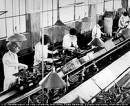
The factory floor was reorganized accordingly. Mimicking the small-team format used by Japanese electronics makers, Vuitton organized workers into groups of six to 12, depending on the complexity of the bags or wallets they are making, according to Vuitton officials and company documents. For maximum efficiency, Vuitton arranged the groups in clusters of U-shaped workstations that contain sewing machines on one side and assembly tables on the other. Workers simply pass their work around the cluster.
Because workers are less specialized now, they can make more types of bags, which gives Vuitton more production flexibility. Last month, for example, the company shifted more workers to its new $770 Lockit bag, which was selling faster than expected, to boost production.
The system also has enabled workers to detect flaws earlier. At one factory, under the old production system, one of every two $1,240 Tikal shoulder bags had frayed inside seams and needed to be repaired, according to a company document. Under the new production system, those flaws are recognized earlier and can be fixed more easily.
Stitching problems on the credit-card pocket of Vuitton's Viennois wallet used to mean that 4 percent of each batch of pockets had to be discarded, another document indicates. Under the new cluster format, that problem has been fixed.
At Vuitton's Issoudun and Conde plants near the Loire Valley, returns of faulty handbags and wallets fell by two-thirds last year, a company document indicates. The company's goal this year is to reduce returns by at least another 50 percent, according to the document.
The production changes left some workers concerned that efficiency improvements would eventually lead to job cuts, workers say. "Pegase has caused job insecurity," says one worker. "Already they are limiting hiring." Vuitton currently employs about 12,000 people world-wide, 4,000 of them in production. Mr. Carcelle, Vuitton's chief executive, has met with hundreds of factory team leaders to explain the company's efforts to improve efficiency and quality. Vuitton executives use the Japanese word kaizen, which means "continuous improvement," to describe their training of factory managers.
The reorganization extended beyond the factory floor. A distribution center in France used to send products directly to Vuitton's stores around the world. Now, the company is building a global distribution hub outside of Paris that will ship to six regional distribution centers: two in Japan, two elsewhere in Asia, one in the U.S. and one near Paris for European orders. Within a week of a product launch, stores around the world feed sales information to France and production is adjusted accordingly. Factories work on a daily schedule, compared to a weekly one before the reorganization.
The reorganization's final stage -- named Keepall after a Vuitton duffel bag from 1930 -- unfolded in the stores. In the past, salespeople advising customers would disappear into stockrooms when products weren't available on the shop floor. McKinsey consultants saw this as a waste of time.
"The boutiques could be twice as effective if instead of the salesperson disappearing to get a bag for a customer, you separate the task," says Concetta Lanciaux, executive vice president of synergies at LVMH.
Now, Vuitton assigns a few employees at each store to the stockroom. At a large new store on Paris's Champs-Elysees, items are sent via service elevator from a basement stockroom to the cash register. They arrive wrapped in tissue paper.
Early indications that the reorganization is working have prompted LVMH officials to consider extending the new factory format to other divisions.
"There are ways in which we can cross-fertilize," says LVMH Chief Executive Bernard Arnault. "One of the major advantages of the group is that everything we learn at Vuitton, we also use with the other brands."

09 October 2006

Richemont acquires Wisdom

Richemont, the Swiss based luxury goods group controlled by the Rupert family, has reinforced its presence in the jewellery watch segment.
The group announced on Monday that it had acquired Fabrique d'Horlogerie Minerva SA in a private transaction from GPP International SA, Luxembourg. No numbers were mentioned.

The well known watch brand Minerva was established by Charles Robert in 1858 and is based in Villeret, Switzerland.
Fabrique d'Horlogerie Minerva SA specialises in the development and manufacturing of high end mechanical movements as well as luxury time pieces.

In a terse announcement Richemont said the transaction would not have a material impact on the group's consolidated net assets and would not have any impact on profitability for the year to end-March 2007.
Richemont, which owns an array of luxury brands, already owns a handful of specialist watchmakers - including Jaeger-LeCoultre, Piaget, IWC, Baume & Mercier, Vacheron Constantin, Officine Panerai and A Lange & Sohne.
Other mainstay Richemont brands include Cartier, Montblanc, Montegrappa, Lancel, Alfred Dunhill and Van Cleef & Arpels.

The expansion of the luxury brands range should be welcomed by the market - especially investors who would prefer Richemont to lessen the influence of the tobacco business on the bottom line.
In addition to its luxury goods business, Richemont still holds an 18.6% stake in British American Tobacco (BAT).

Luxury Retail

Luxury retail wooing local affluents instead of relying on shopping tourism.

According to The Wall Street Journal:
"affluent shoppers have boosted sales at the world’s leading players (In the luxury industry), by an average of 14 percent in the first six months of this year, according to Swiss bank Lombard Odier Darier Hentsch. Sales are expected to reach a record of nearly $200 billion by year end – higher than when sales of shoes, watches, dresses and other luxury items previously peaked five years ago, according to luxury consultancy Intercorporate.
To meet demand, fashion houses are aggressively opening shops again after a long hiatus. Louis Vuitton recently inaugurated a new boutique in Budapest, while Valentino and Ferragamo signed leases in India. French fashion house Hermes International is expanding its flagship Paris boutique so it will take up half a block.
“It makes people feel confident if there are more people getting rich and the rich are getting richer,” Gucci Group Chief Executive Robert Polet said in an interview. Sales at the group, which includes the core Gucci brand, Bottega Veneta, Yves Saint Laurent and others, increased 20 percent between January and June.
Behind the scenes, though, fashion houses are planning for the next, inevitable downturn. Their strategy: Make their business less dependent on tourism flows – a traditional driver of sales – by developing stronger local clienteles."

Musical Chairs - Chloe, Marni, Gucci

Yvan Mispelaere's is said to be joining Gucci as design director, working under creative director Frida Giannini. Mispelaere was until a few days ago part of the Chloé design team that gained fame under Phoebe Philo and continued without the designer when she resigned in January. He designed the last collection S/S 2007 together with colleagues Blue Farrier and Adrian Appiolazza- then bade them farewell, leaving the city of light for the tuscan countryside (also know as Gucci epicenter).

Yvan Mispelaere will be replaced by Paolo Melin Anderson, one of Marni's hidden talents.
Chloé sales more than doubled last year, trending at 90% for the April period, under creative direction of Philo. Despite her departure, growth at the fashion house continued “beyond expectations,” said parent company Richemont. Mispelaere has previously worked for Prada in Milan and Valentino in Rome and was creative director of Louis Féraud.

Luxury for hire

After renting your dream apartment why not push this idea a little further.... after all, our hand bag houses the rest of lives (the part we didn't leave in that rented loft).

Problem: the coveted bag is not always at hand/affordable. When fashion trends appear and vanish as fast as those gophers you have to hit on the head at amusement fairs, why not just rent the object of your desire?
Designer bags, apparel and jewlery etc.... all is to be had (for a limited period, anyhow).
Warning - luxury may be for rent, taste not so much.

New York Times 12th of September

Companies such as Bag Borrow or Steal (bags and jewlery), Borrowed Bling (jewlery) or Wardrobe NYC (designer clothes) provide this confidential service.

08 October 2006

Shall We dance? Let's make believe

2nd October 2006
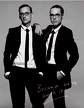
Viktor&Rolf put on one one of the best shows at the Carousel du Louvre this week (creatively as well as entertainment wise) with their ballroom dancing inspired défilé.
And why wouldn't it be? Viktor&Rolf's self derisional world (their website motto : "because we're worth it") takes the sombre out of expert and leaves the elegant in trendy. Their topsy-turvy upside down store reflects their joie de vivre and amusement of creativity. Proof is, you can be a star and still be star-struck.
The show had to be great! And it was. VIDEO - Viktor&Rolf

The excellent Rufus Wainwright played live. The magic was complete.
The event was also the occasion to launch the new ANTIDOTE (L'Oréal) first men's fragrance.

From a business point of view, for the moment Dutch duo Mr&Mr Horsting and Snoeren don't expect massive sales of their creations.
According to WWD (sept 13th) : "Diesel owner Renzo Rosso is said to have another quirky design house in his sights: Viktor & Rolf.The fashion maverick — who already owns Martin Margiela and produces the Dsquared line, as well as his denim giant Diesel — is in negotiations with Viktor Horsting and Rolf Snoeren about a possible deal, which could involve buying all or part of their company, according to sources. Talks are said to be at an advanced stage, although a final price has yet to be agreed upon."

06 October 2006

Loris Azzaro

According to Fashion United UK :

French fashion house Loris Azzaro has been acquired by Reig Capital Group. The Spanish private equity group, a family-owned Andorran business based in London and Barcelona , purchased the company from Compagnie Financiere Frey, which bought it in 2002. Reig is active in the luxury goods sector with its ownership of Spanish jewellery brand Vasari, Andorran multibrand luxury store Coco Bis and now Azzaro. Terms of the deal were not revealed, although sources have estimated it at less than €20 million.

“It's an iconic brand with a distinct style and timeless quality – and it as a lot of potential,” Sagra Maceira de Rosen, managing director of Reig's luxury and retail division and investment director of Reig Luxury Partners, the company's private equity fund, told WWD. “Luxury ready-to-wear will remain the core of the brand, but we'll continue to develop footwear and, eventually, possibly go into accessories. We're taking it step by step and really want to get a feel for the business.” Designer Vanessa Seward will remain with the house. She took over from Azzaro himself upon his death in 2003 and has won acclaim for her glamorous designs. Her fans include Hollywood luminaries like Nicole Kidman and Penelope Cruz.

Reig plans to expand Azzaro's ready to wear assortment to include more than the current offering of expensive occasion wear. Maceira de Rosen said that including retail stores in cities like Los Angeles , London , Moscow and Hong Kong , the company is will “also be pushing the wholesale strategy. As we open stores and increase distribution, the collection will widen and grow.” Contrary to typical private equity investments, Reig intends to keep Azzaro for a very long time. “It's an iconic brand that we love, and the Reig family wants to keep it.” Whether the company will acquire any other luxury brands is unclear. Reig executives could not be reached for comment.

Azzaro was founded in 1962 and became known for figure-hugging jersey-style gowns featuring cutouts. It also became famous for its fragrances, which are produced by former owner Clarins.